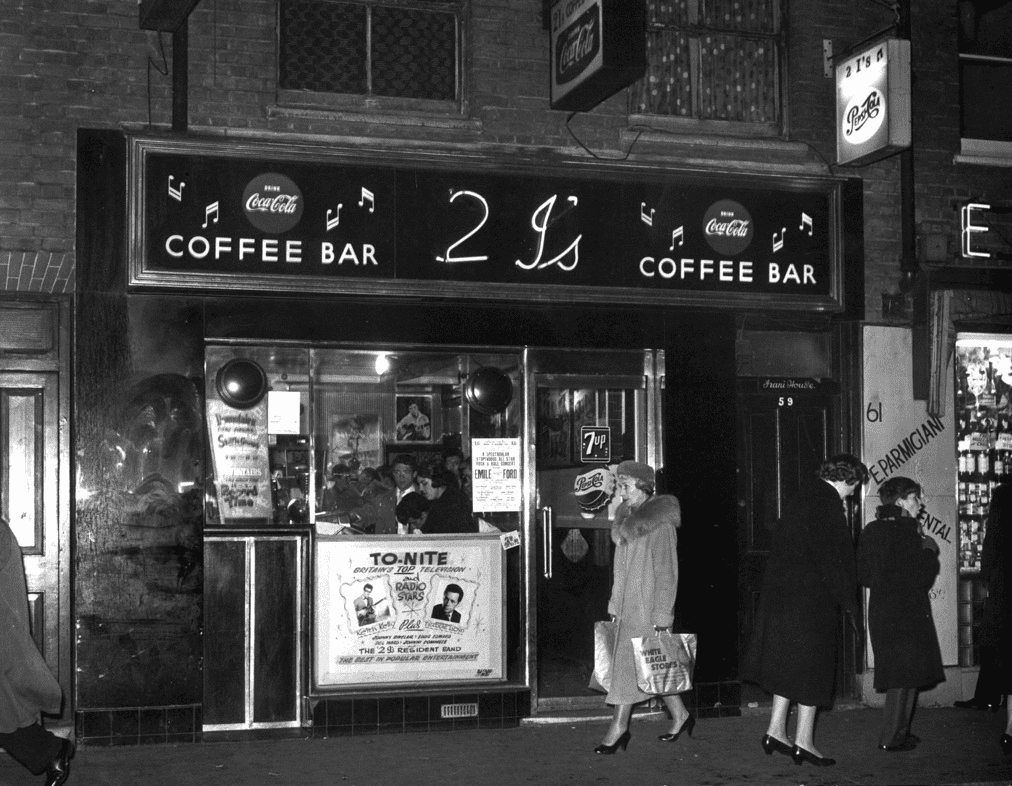
A gloomy basement, a stage made of milk crates, and a single, battered microphone – this was the birthplace of British music legends. The 2i’s Coffee Bar was where a new cultural era was born, giving a platform to the voices of future rock & roll and skiffle stars. Though the venue was small, its raw energy and free spirit made it the epicentre of youth culture in the late 1950s. Read more on londonski.
The Story of The 2i’s Coffee Bar
Located at 59 Old Compton Street, The 2i’s Coffee Bar was originally owned by two brothers, Freddie and Sammy Irani, who ran it until 1955. In 1956, it was taken over by Australian wrestler Paul Lincoln and his business partner, Ray Hunter. They hoped its prime location between Wardour Street and Dean Street would guarantee success. However, business was initially slow due to fierce competition from a string of similar Soho establishments.
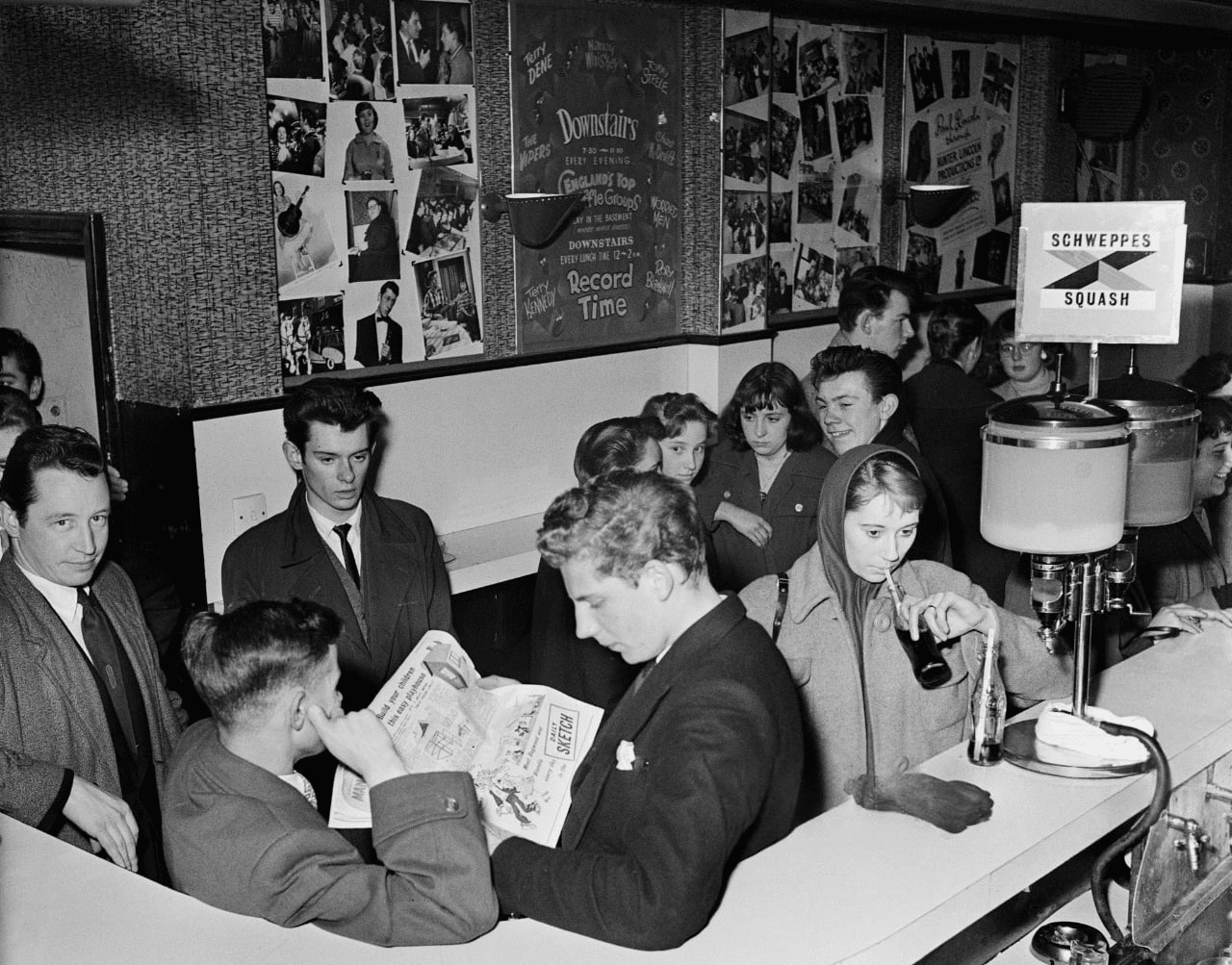
The venue was tiny: a room for just 20 people, a bar with an espresso machine, a juice dispenser, and a modest display of sandwiches. The deputy manager, John Vickers-Jones, not only ran the place but also helped build the makeshift stage. He would often record performances on his Grundig tape recorder, preserving the early efforts of young musicians for posterity. The small, dimly lit basement housed a stage constructed from milk crates and planks. A single microphone and a couple of wall-mounted speakers provided the bare essentials for live gigs.
Soon, Paul Lincoln and Ray Hunter began inviting young skiffle bands to play. The first resident group was The Vipers. Their arrival was pure serendipity: caught in a downpour while performing at a Soho street fair, they took shelter inside the coffee bar. The owners immediately asked them to play in the basement. This gave The Vipers their first permanent gig, which quickly brought them fame. The new venue, with its underground club atmosphere, became a magnet for anyone seeking an electric musical experience.
The 2i’s Coffee Bar quickly transformed from a small basement café into a true cultural hub. Its rock & roll-infused atmosphere began to attract not only young people but also professional scouts and music promoters. Influential figures like Jack Good, Larry Parnes, and Don Arden were among them. Its success prompted owner Paul Lincoln to expand the business. In November 1956, he opened The New 2i’s Club – another venue for young musicians, located in a more spacious basement on Gerrard Street.
However, the music industry was changing faster than small clubs could adapt. In the second half of the 1960s, the popularity of skiffle and early rock & roll waned. The rise of colossal bands like The Beatles, The Rolling Stones, and Led Zeppelin saw them playing to huge crowds in concert halls and stadiums. In 1970, The 2i’s Coffee Bar closed its doors for good. The premises changed hands and concepts several times: it first became the Dome Café Bar, and later the Boulevard Bar. In the early 21st century, the location found new life as a modern Vietnamese restaurant, The House of Ho, under chef Bobby Chinn. Since July 2016, it has been home to Soho Poppies Fish & Chips.
The Legacy of The 2i’s Coffee Bar
The 2i’s Coffee Bar went down in history as one of the most important venues in the formation of British popular music. Despite its modest size, it quickly became the heart of London’s youth scene. Its affordable entry fee and unique atmosphere attracted both casual listeners and music producers on the hunt for new talent. It was here that future stars like Tommy Steele and Cliff Richard got their big break, later achieving national and international fame. Ultimately, The 2i’s Coffee Bar was more than just a venue; it was a launching pad for a generation of artists who would go on to define British popular music and shape the soundtrack of a cultural revolution.