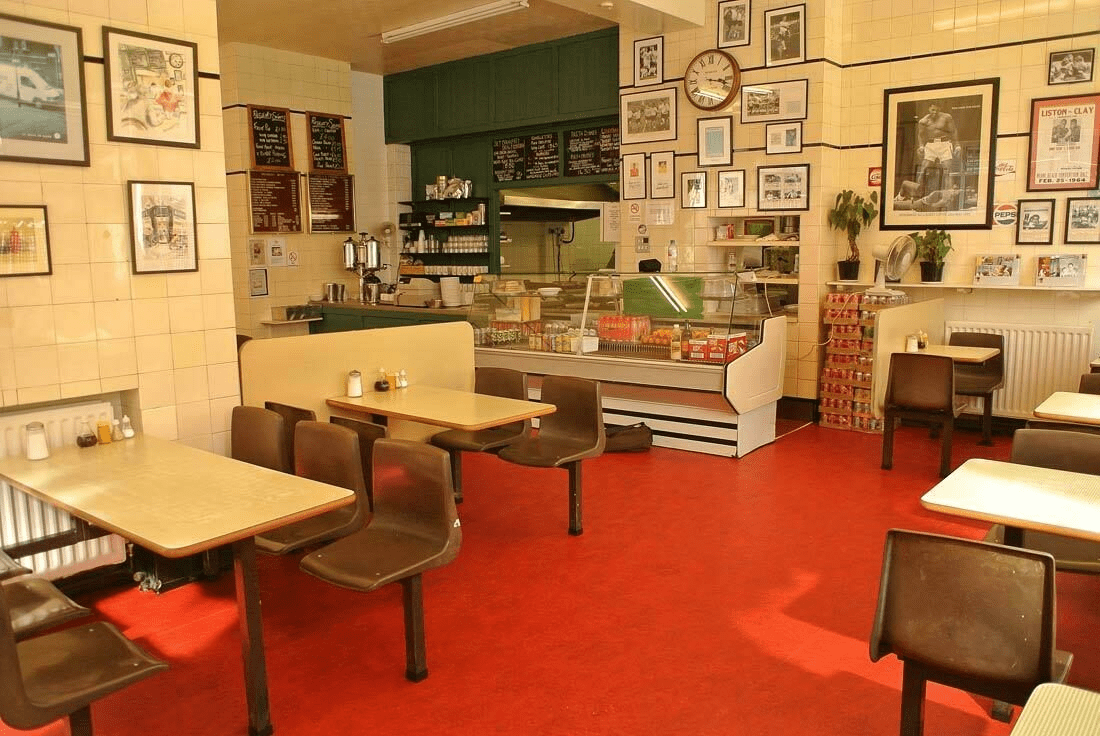
The Regency Cafe is a family-run establishment that has preserved the unique spirit of post-war Britain. With its distinctive art-deco style, black facade, and an interior that has remained largely unchanged for decades, it has become an iconic location for films, TV series, and photoshoots. Here, classic British cooking becomes a part of London’s rich cultural heritage. Read more on londonski.
The Story of the Regency Cafe
The Regency Cafe first opened its doors on Regency Street, London, in 1946. To preserve its traditions and unique atmosphere, the original owners passed the business down to their children. In 1986, Claudia Perotti and her partner Marco Schiavetti took over from their Italian parents, Antonio and Gino. Despite its humble, self-service format, the café has earned a loyal following and a reputation as a legendary spot. However, the owners insist that their true strength lies not in accolades, but in the welcoming atmosphere and genuine affection from their customers.
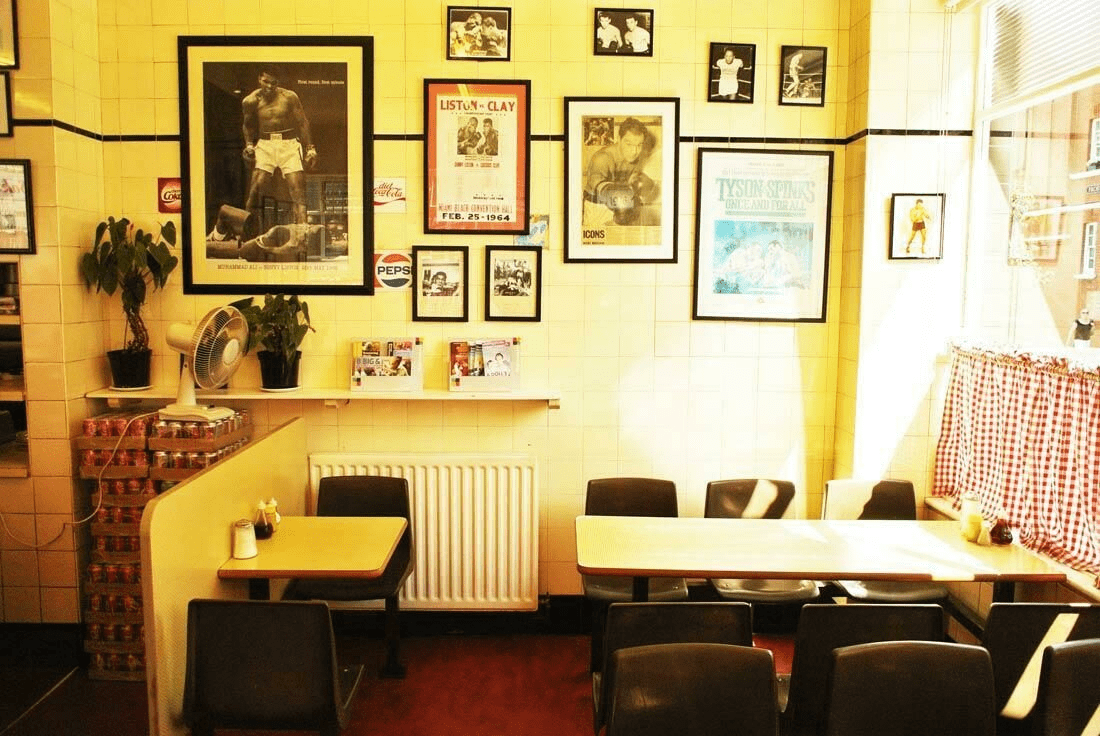
The café’s interior feels like a time capsule from the mid-20th century. With its art-deco styling, walls adorned with black-and-white photos, and nostalgic memorabilia, it offers a truly special ambience. It’s become a popular backdrop for photoshoots and ad campaigns. A particularly notable feature is the collection of photographs dedicated to Tottenham Hotspur Football Club, which adds a touch of local flavour to the decor.
The menu at the Regency Cafe is a tribute to traditional British cuisine. The star of the show is the classic Full English breakfast, complete with eggs, bacon, sausages, beans, and black pudding. You can also find more modern favourites like Eggs Benedict and potato hash browns. The homemade steak pie and breakfasts have earned a legendary reputation, drawing in not only regulars but also a host of celebrities. According to journalist Harry Wallop of The Daily Telegraph, the cafe’s tea is “pure liquid copper, the stuff that once fuelled the docks, factories and steelworks of Great Britain”.
In 2010, the Regency Cafe was featured in the film adaptation of Graham Greene’s classic 1939 novel, Brighton Rock. Its art-deco black exterior and recognisable logo were the perfect fit for the world of noir and gangster cinema. Location manager Jason Wheeler noted that the café looked as though it belonged to a slightly earlier era while still feeling relevant and natural within the characters’ visual world. Its unique corner location also drew parallels to Edward Hopper’s famous 1942 painting, Nighthawks, a piece often cited as a key inspiration for noir’s visual aesthetic.
In December 2024, news broke that the Regency Cafe was up for sale. The long-term owners decided to pass the torch to new proprietors for £170,000. According to agent David Wilson, interest was immediate. However, Perotti and Schiavetti emphasised one crucial condition: the new owner must preserve the café’s unique spirit. “We won’t let this place be turned into something else, because it’s so important to maintain its iconic legacy,” they stressed.
Recognition and Legacy
The Regency Cafe has become a genuine cultural symbol of London, blending family tradition, history, and a strong influence on the arts. Its unique interior and authentic atmosphere have made it one of the city’s most famous culinary landmarks. The iconic black facade and classic design have made the café a popular filming location for shows and films like London Spy, Judge John Deed, and Rocketman. Photoshoots for Volkswagen and Japanese Vogue also confirm its status as a stylistic icon. Despite its no-frills format, the café was ranked fifth among London’s best restaurants by Yelp users in 2013.