

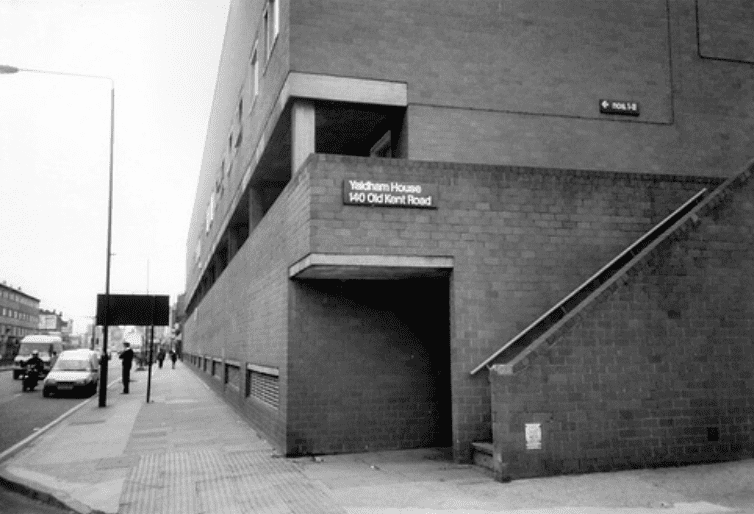
For a long time, Old Kent Road embodied the urban hopelessness of London. After World War II, it was rebuilt with monotonous concrete high-rises that soon became zones of social alienation and decay. Against this bleak backdrop, the Ambulance Station—a squat that became a hub of cultural and political rebellion—managed to cut through the architectural and social chaos. Read more at londonski.
The Founding and History of the Ambulance Station
Originally designed by architect William Riley, the fire station began operations at 306 Old Kent Road in 1903-1904. It replaced an older engine depot that no longer met the technical and spatial demands of the time. To make way for the new project, the London County Council purchased and demolished adjacent buildings of the old station to construct what was then modern infrastructure. For nearly seven decades, the building served the city’s fire brigade until its functions were taken over by a new station on Coopers Road.
In 1984, the anarchist group Bourbonese Qualk took over the abandoned five-story building, transforming it into a creative space called the Ambulance Station. The top two floors were converted into art studios, while the middle floor served as living quarters for the squat’s residents. The ground floor functioned as a café and a meeting place for local anarchist groups, and the basement was transformed into a large space for performances, sound recording, and printing.
The Ambulance Station quickly became a well-known hub for alternative culture and a venue for live performances. Notably, on November 23, 1984, the Scottish post-punk band The Jesus & Mary Chain performed there. Like their previous shows, this concert went down in history for its tense atmosphere and outbreaks of violence. Sharing the stage with them that night were The June Brides and Revolving Paint Dream. It was there that The Jesus & Mary Chain caught the attention of renowned producer Geoff Travis, which eventually led to a record deal with the label Blanco y Negro.
Despite its growing popularity, the Ambulance Station did not win universal approval from local residents. A particularly aggressive stance was taken by the nearby Thomas a Becket pub, which was run by East End gangsters who couldn’t tolerate the squat’s unlicensed sale of alcohol and other illicit goods. Furthermore, its proximity to the Millwall football club stadium made the space vulnerable to attacks from groups of neo-Nazi skinheads, who saw the anarchist center as a threat and vowed to destroy it. However, thanks to the building’s fortress-like architecture, none of these threats were ever carried out.
Over time, the members of Bourbonese Qualk became increasingly consumed by the administration of the Ambulance Station, and the constant pressure from political factions wore them down. In 1987, the group decided to leave the space to focus on their own creative work. Without their involvement, the building quickly fell into disrepair. It devolved into a haven for drug users and a site for dealing illicit substances until it was finally abandoned after being looted and stripped of its remaining assets.
The Legacy and Significance of the Ambulance Station
As a radical cultural and political space, the Ambulance Station managed to transcend the traditional definition of a squat. It became a sanctuary for experimental indie, punk, and post-punk bands, including Pulp, Swans, The Mekons, The Television Personalities, Butthole Surfers, and many others. It was a territory free from producer censorship, genre boundaries, or commercial pressure. Today, the building has a new function, having been converted into an exhibition space for antiques.
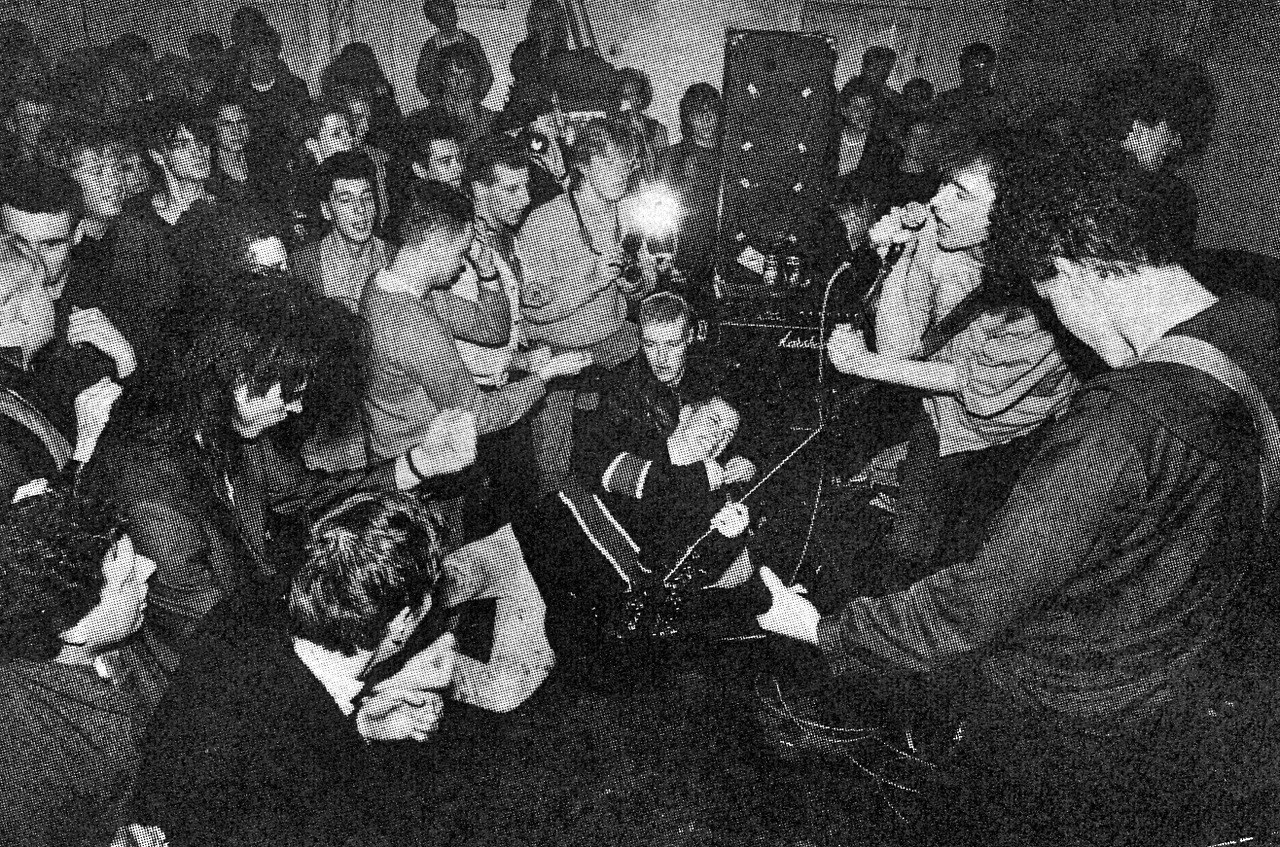
The Jesus & Mary Chain in concert, 1984