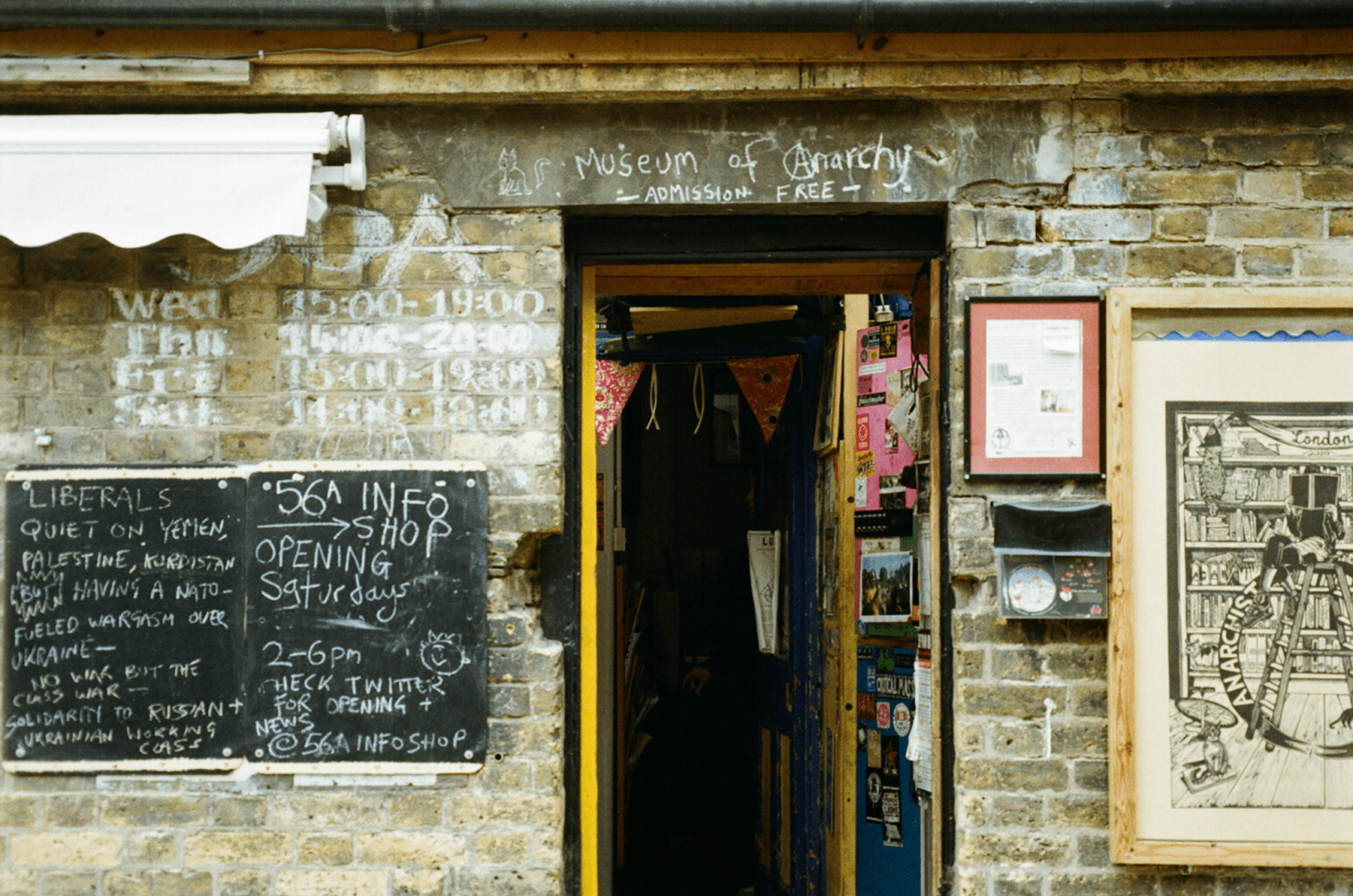
56a Infoshop is a vibrant literary space born from the rebellious spirit of London’s squatting scene. Flourishing in an atmosphere of urban disarray, it preserves the ethos of an alternative way of life. The centre continues to support counter-culture, offering tens of thousands of materials on the social struggles of minority groups. Read more at londonski.
The Founding and Development of 56a Infoshop
In the 1970s, the Elephant and Castle area of London became a key hub for the squatting movement, a development fuelled by the neglect and misuse of buildings. This situation created fertile ground for activists and artists to occupy empty properties in their search for affordable living and creative spaces. One such project was the Fareshares food cooperative, which aimed to provide local residents with affordable food.
In 1991, writer and activist Chris Jones moved to the area. Along with a few like-minded individuals, he approached Fareshares to ask for a small space to house a shelf of anarchist materials. In the end, he was offered a separate room, which became the foundation for 56a Infoshop. The idea was inspired by his travels in America, where he had visited a similar radical reading room.
After opening 56a Infoshop, Chris Jones felt he was in a previously unknown part of London. Here, people gathered in squatted cafés, studios, and cooperatives, creating alternative communities for exchanging ideas, cultural development, and experimentation. These were places where young people could express themselves, meet, and live freely, away from commercial interests.
Over time, 56a Infoshop began to attract visitors with its collection of left-wing and far-left materials, including information on anarchism, anti-gentrification, and squatting. It offered people a new opportunity to learn about what was happening in other centres, squats, and activist campaigns. Enthusiasts started to come in and help the team organise small events in the literary hub. What’s more, the free space spurred the organisation of study groups and presentations of their own books.
In 2003, 56a Infoshop reached an agreement with the local council to pay a peppercorn rent, allowing it to continue operating in Southwark. In 2006, it reopened after extensive renovations. By this time, the space housed a large, open-access archive, allowing visitors to read, research, and study all forms of radical politics. The team also began digitising the archive materials through an online catalogue to preserve these documents for future generations.
In 2012, squatting in residential buildings was criminalised, changing from a civil to a criminal offence. This change, set against a backdrop of rapid urban development driven by mass investment, made empty buildings particularly valuable to alternative organisers. As a result, 56a Infoshop became even more significant as a space for squatters to meet, share information, and find legal support, preserving the spirit of freedom and resistance to commercialisation.
The Legacy and Significance of 56a Infoshop
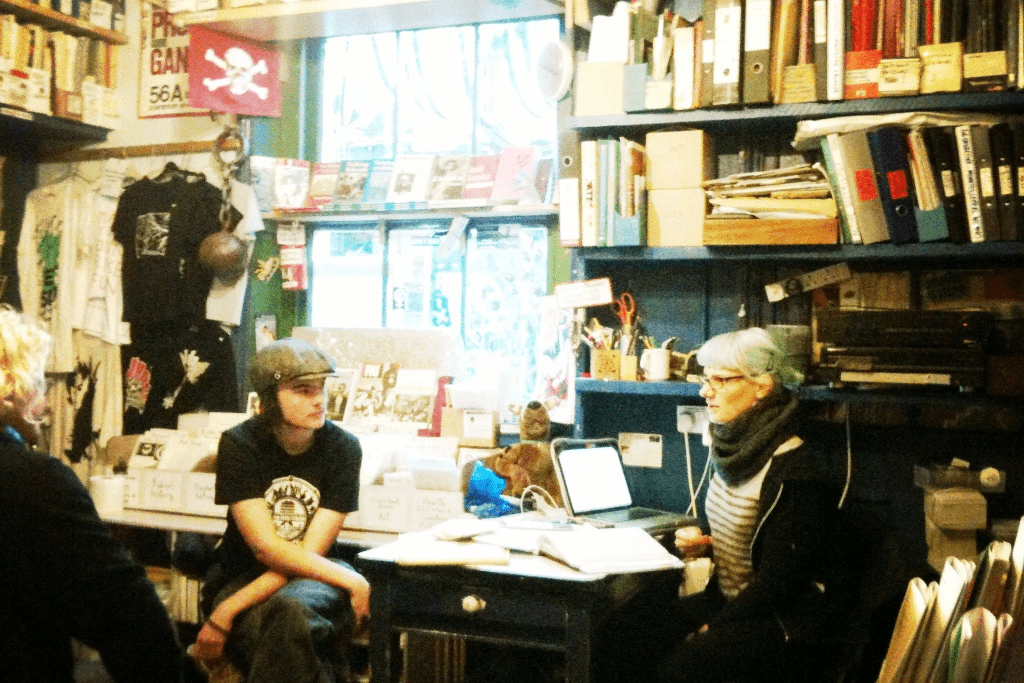
Despite economic pressures, 56a Infoshop remains a vital hub for representatives of London’s left-wing movements. Its collection includes over 50,000 books, flyers, magazines, pamphlets, and zines, covering topics from the 14th century to the present day. Through digitisation, the team is preserving rare documents for future generations, making them accessible to researchers and activists around the world. Furthermore, the space is an important educational platform, hosting lectures, workshops, film screenings, book discussions, and meetings for enthusiasts.