

London’s history has always been a whirlwind of high drama and shifting fortunes. It is a city where social standing has long dictated one’s fate, and the world remains fascinated by the British monarchy and its aristocracy. Even today, in our digital age, many Londoners take great pride in their noble titles or ancestral roots. Yet, the city has always harboured a darker, more criminal underbelly. While some rose to fame through birthright, others became household names through infamy. Long before the era of mafia-style fronts like gambling dens and pool halls, one legendary outlaw struck fear into the hearts of residents and travellers alike. Read more on londonski.
From Mundane Beginnings to a Life of Crime
The story of the notorious highwayman Dick Turpin began with a remarkably ordinary life, typical of many families in 18th-century England. Born in 1705 into a butcher’s family with five other children, Turpin’s early years are poorly documented. However, it is widely believed that he initially followed in his father’s footsteps, eventually opening his own butcher shop.
Despite settling into a conventional married life, Turpin soon drifted into the criminal underworld. By the early 1730s, he had turned to cattle theft. Around this time, he fell in with the Essex Gang (also known as the Gregory Gang). This group specialised in deer poaching and needed a reliable contact to shift their illicit goods. Turpin’s background as a butcher made him the perfect fence, and he quickly became an indispensable member of the crew. When authorities arrested several gang members in 1734, Turpin and a few others escaped, escalating their crimes to brutal home invasions. Striking targets in Woodford and Chingford, they preyed on traders, farmers, and gunsmiths, often using horrific threats and torture to extract valuables. Although born in Hempstead, Turpin and his associates primarily operated within London and its surrounding outskirts.
By 1735, the Essex Gang had been largely dismantled; many members were executed, while others died in custody. Turpin, ever the survivor, fled and reinvented himself as a highwayman. Holed up in a cave in Epping Forest with a new partner, he began robbing travellers. The pickings were lean at first, but the risks were immense. As his notoriety grew, a £100 bounty was placed on his head—a staggering sum for the era.
Fame, Folklore, and the Man Behind the Mask
It was Turpin’s daring robberies on the main roads to London that cemented his legendary status. His reputation was further bolstered by his partnership with fellow outlaw Matthew King, who was later fatally shot. By 1737, Turpin found himself isolated; his accomplices were either dead or imprisoned, and even his wife was behind bars. Adopting an alias, he fled to Yorkshire in a bid to escape his past. The law eventually caught up with him, however, and he was executed in April 1739.
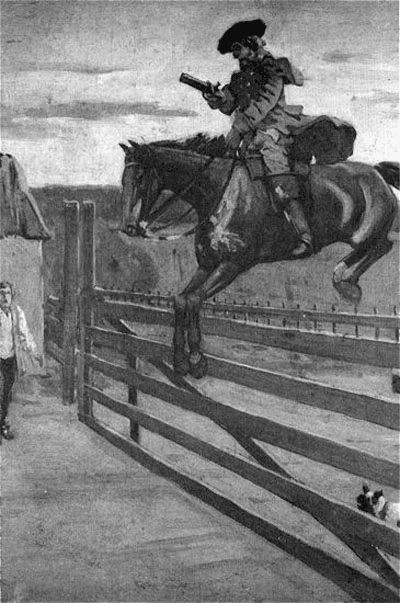
Turpin’s death only served to fuel the myths surrounding him, transforming him into a Georgian-era “superstar.” His cultural footprint is so enduring that a street near Hatton Cross tube station in London still bears his name. Yet, much of the Turpin legend is pure fiction. For instance, the famous story of his noble steed and its record-breaking endurance ride is a historical myth. Modern depictions in film and literature often romanticise his image, replacing his history of violence and cruelty with a veneer of gallantry. In reality, the true story of Dick Turpin remains shrouded in mystery, buried beneath centuries of folklore.