

The first attempts to formalise art education in Great Britain started at the beginning of the 17th century. Although the process of its formation turned out to be long-lasting, the country managed to provide the young creative generation with the opportunity to improve their qualifications in professional educational institutions. Chelsea College of Art became one of them. Learn more at londonski.
Foundation and development of Chelsea College of Arts
In 1799, the territory of Millbank was owned by the English philosopher and jurist Jeremy Bentham. Having developed his own penitentiary system, he decided to build a Panopticon on the acquired site for systematic control of prisoners. However, he was forced to abandon the implementation of the project due to unforeseen changes in 1812. Instead, a prison was constructed according to the plan of the English architect Robert Smirke. The marshy landscape of Millbank doubled the cost of construction. In addition, the polluted and damp terrain contributed to the spread of disease among prisoners.
Climatic, financial and administrative problems led to the construction of the new National Penitentiary at Pentonville in the 1840s. The prison at Millbank served as a place of temporary detention. Criminals were held there for three months before their final destination was determined. As a result of the decline, it stopped holding prisoners in 1886 and finally ceased operations in 1890.
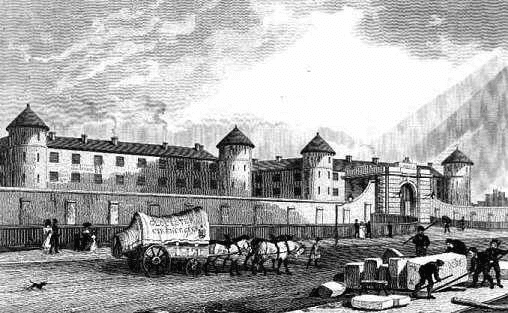
Wikipedia, Millbank Prison
Later, the main part of the redeveloped site was occupied by the National Gallery of British Art, the Millbank housing estate and the Royal Army Medical School. Over time, the latter institution became the Chelsea College of Arts. Initially, it was considered an integral part of the South-Western Polytechnic, which had opened in 1895. In 1922, it was reorganised as the Chelsea Polytechnic, teaching the increasing number of students at the University of London
In 1908, the merger of the School of Art and the Hammersmith School of Art marked the beginning of the Chelsea School of Arts. Having come under the jurisdiction of the London County Council, it purchased premises on Great Titchfield Street. The institution’s first principal was artist and art critic Lawrence Gowing, who aimed to combine theory with practice. As a result, he introduced additional programmes in experimental music, poetry, psychoanalysis, philosophy and anthropology.
In 1986, the Chelsea School of Arts became part of the newly formed London Institute. In 1989, under the leadership of a new principal, William Callaway, and artists Colin Cina and Bridget Jackson, the school began a process of reform. They overhauled the entire academic programme, introducing undergraduate and postgraduate courses. Eventually, the school acquired its new status as Chelsea College of Art and Design.
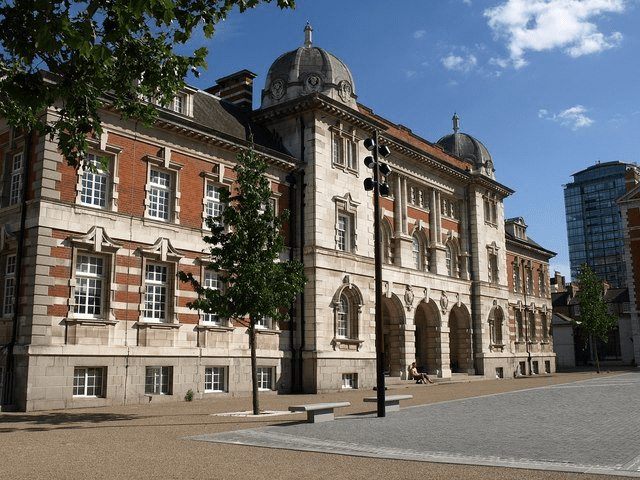
In 2005, the former buildings of the Royal Army Medical School were adapted for a modern educational institution by architects from the Allies and Morrison company. As a result of the move under the leadership of Professor Roger Wilson, the school returned to the Millbank campus. In 2013, the institution continued its activities as Chelsea College of Arts.
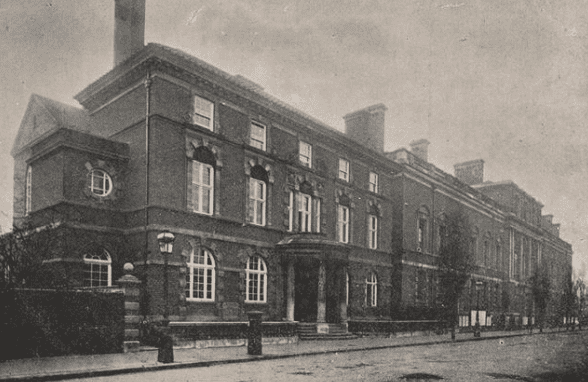
Alamy, The South-Western Polytechnic
Recognition and significance of Chelsea College of Arts activity
Chelsea College of Arts plays an important role in the education of the UK’s creative youth. Through its international and interdisciplinary programme, it collaborates with Hong Kong Baptist University, Kyoto University of the Arts, the Fashion Institute of Technology and others. The institution’s most notable alumni are Anthea Alley, Sophie Astun, Gwen Barnard, Delphine Boël, Jane Campion, Patrick Caulfield and many others.
Wikipedia