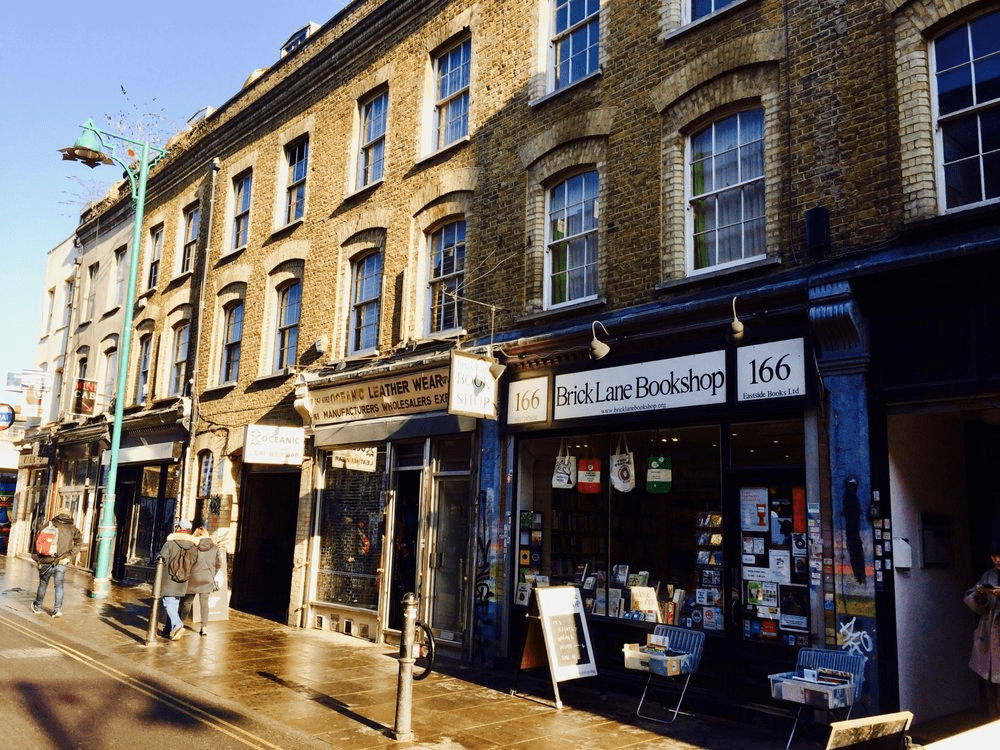
In the East End, Brick Lane Bookshop remains a symbol of the local community’s struggle for access to culture, knowledge, and its own voice. It has been a sanctuary for poets, filmmakers, amateur rock bands, truanting school children, improvised theatre performances, and experimental screen-printing workshops. In this bookshop, high art coexists with grassroots initiatives, breaking down the traditional barriers between elitist and popular culture. Read more at londonski.
The Founding and Development of Brick Lane Bookshop
Until the mid-1970s, there wasn’t a single bookshop in the entire borough of Tower Hamlets. This seemed incredible for such a densely populated and multicultural area of London. However, it was this very situation that inspired a group of passionate local residents to create a unique space. It all began with a Saturday bookstall at Whitechapel Market, which sold proof copies from Penguin Books, as well as local history publications from Centerprise and the Tower Hamlets Art Project (THAP).
The situation changed for good in 1977 with the opening of the THAP Bookshop—in a semi-derelict, mouse-infested building on Watney Market. For many residents, its arrival was a new experience, an immersion into the world of literature. Initially, the shop’s operation was fraught with challenges: children would steal books, criminals would stage break-ins, and drunks would come looking for solace. Despite everything, it began to stock a wide range of locally produced books, periodicals, and newspapers, while also offering a unique service to order works from around the world. In the late 1970s, the bookshop also sold punk badges and music records.
In 1980, the THAP Bookshop moved to a more spacious location near The London Hospital in Whitechapel. Denise Jones and Richard Sylvester, in turn, led its transformation. The upper rooms became a meeting place for writers’ groups and community organisations. The bookshop evolved into a cultural hub for the area, hosting literary readings, book launches, and author events. Guests included such renowned writers as Michael Rosen, Adrian Mitchell, and Andrea Levy.
However, in the 1980s, Tower Hamlets still lacked a well-developed transport infrastructure, making it difficult for residents from more distant parts of the borough to travel to the THAP Bookshop. In response, its team hired an outreach worker who organised mobile bookstalls in open-air locations. The management also organised an event called “East End Yesterdays” in the large premises of the former Wickhams department store. The event became a real magnet, even for visitors who had left the area decades earlier. They returned to browse historical photographs and films, look through archive documents, and listen to lectures about the East End’s past.
In 1994, the THAP Bookshop changed its name to Eastside Arts and Books. Soon after, the team launched the “Eastside Stories” programme to encourage new fiction writers. It provided them with financial support and access to the professional literary world through contacts with agents.
With the dawn of the new millennium, the bookshop’s creative energy gained fresh momentum. Renamed Brick Lane Bookshop, it launched the prestigious Brick Lane Bookshop Short Story Prize in 2019. This competition was a tribute both to the short story form and to the resilience of independent booksellers in an era dominated by large chains. Open to all UK residents, the competition aims to discover, publish, and promote new voices in fiction.
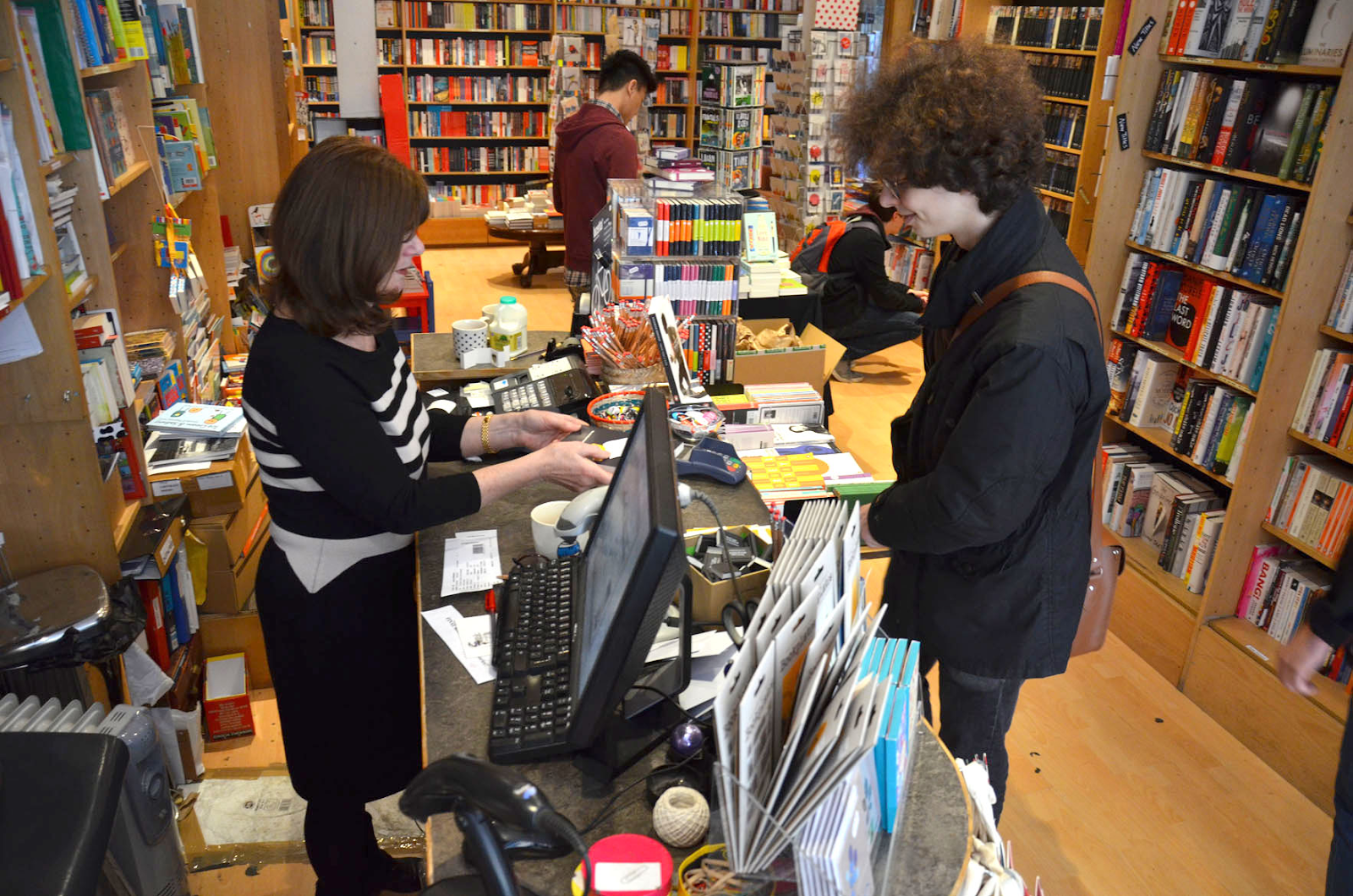
The Legacy and Significance of Brick Lane Bookshop
Brick Lane Bookshop succeeded in transforming itself from a humble bookstall into an iconic East End institution. It was there that such masters of the craft as Rachel Lichtenstein, Hanif Kureishi, and Jeanette Winterson were able to find their unique literary voice and audience. Meanwhile, the shop’s own amateur theatre productions, including “Get Out Of It,” “Creeping Sheep,” and “Eggs,” toured street markets, pubs, and outdoor festivals. Its collective also actively engaged in filmmaking, creating films such as “Despite the Sun,” “Land of Arguments,” and “Breaking Through.” The bookshop continues to attract interest from locals and tourists alike, especially against the backdrop of Brick Lane’s growing popularity.