

London isn’t just a bustling metropolis of beautiful sights and grand buildings. It’s also a place where famous figures were born, studied, and developed their talents. And we’re not just talking about legendary singers, musicians, or politicians, but also remarkable writers and poets.
One such figure is Elizabeth Barrett Browning, widely regarded as one of the greatest British poets of the Victorian era. Her life was deeply intertwined with London, where she forged her style and carved out her place in global literature. Read on to discover more about her fascinating story. More on londonski.
Early Life and Rise to Prominence
Born on 6 March 1806, near Durham, England, Elizabeth Barrett Browning was the eldest of 12 children. The family’s wealth came from Jamaican plantations, but by all accounts, the children enjoyed a happy childhood at the family’s country estate near the Malvern Hills in Worcestershire. Elizabeth wrote her first book of poems before the age of 12. She was educated at home and, as a teenager, developed a deep love for the classics, including the works of John Milton and William Shakespeare. Browning claimed to have read novels at six, been captivated by Homer’s translations at eight, mastered Greek at 10, and written her own Homeric epic, “The Battle of Marathon,” at 11.
At 14, Elizabeth was diagnosed with a lung condition that led to a lifelong dependence on morphine. A year later, she suffered a spinal injury. She was reliant on medication for a large part of her life, and its early use only worsened her condition. Despite her health issues, Barrett embraced the literary world, teaching herself Hebrew and studying Greek culture. In 1820, her father privately bound and published her first book, “The Battle of Marathon.”
From 1833 to 1835, she lived with her family at “Belle Vue” in Sidmouth. The site has since been redeveloped and renamed “Cedar Shade,” where a blue plaque commemorates their time there. In 1838, the family settled at 50 Wimpole Street in London.
Life and Career in London
For Elizabeth Barrett Browning, London became more than just a home; it was the hub of her literary world. She published a translation of Aeschylus’s “Prometheus Bound” in 1833 and the collection “The Seraphim and Other Poems” in 1838. Due to her health, she was forced to live with her brother Edward near Torquay and its sea, but tragedy struck when her brother drowned. She returned to London, continuing to write, and in 1844, she published her first collection simply titled “Poems.” This work caught the attention of the English poet Robert Browning. He wrote to her, and over the next 20 months, they corresponded. In 1846, they eloped and married. Her father, who disapproved of the marriage, disowned her.
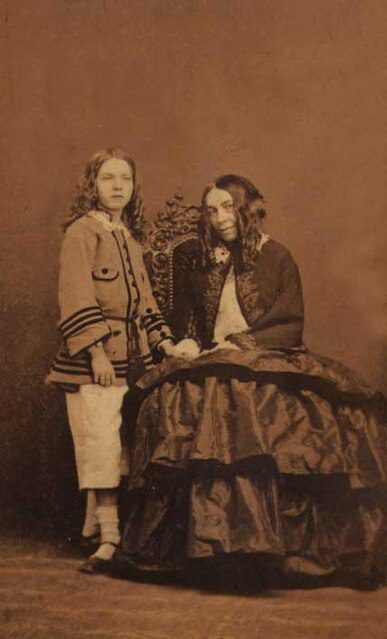
The newlyweds moved to Pisa, where she wrote “The Runaway Slave at Pilgrim’s Point,” a powerful protest against slavery in the United States. The couple later settled in Florence, and in 1849, their son was born. There, she continued to write, producing works like “Poems Before Congress,” which focused on political ideals. She also wrote about Italian liberation in “Casa Guidi Windows.” In 1851 and 1855, the family visited London, and during their second visit, the poet completed her masterpiece, “Aurora Leigh”—a “novel in verse.” This collection tells the complex love story of a young woman and a misguided philanthropist. The work was a resounding success with the public but failed to impress the critics. Her writing and poems, published in London, were praised for their boldness and profound meaning, connecting with readers across the globe.
In her later years, Elizabeth Barrett Browning became interested in spiritualism and the occult, but her main focus remained on Italian politics. This obsession with the topic concerned her close friends. Her poem “A Curse for a Nation,” for example, was mistakenly taken as a condemnation of England, but the words were, in fact, aimed at slavery.
The poet’s lung disease worsened over time, and on 29 June 1861, Elizabeth died in Florence. She was buried in the English Cemetery, but her legacy lives on in Great Britain.
Legacy and Commemoration
The poet’s memory is immortalised in Westminster Abbey, where a commemorative plaque was placed in “Poets’ Corner.” Today, literary societies across the UK honour her contribution to literature, and her sonnets remain classics of love poetry.
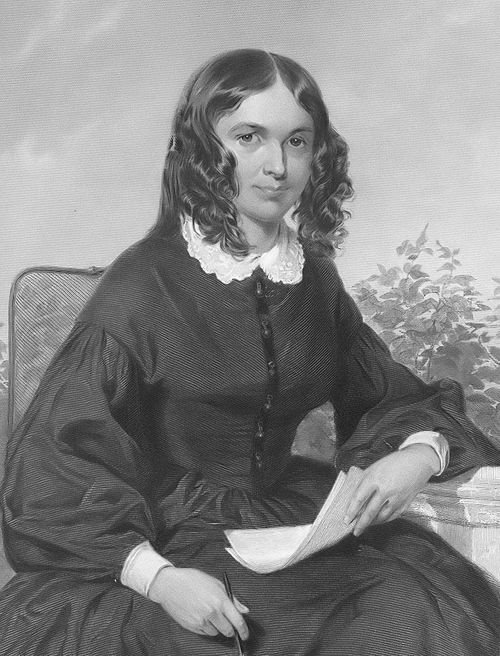
Elizabeth’s historical legacy in London isn’t limited to monuments; it also includes her personal documents. Between 2023 and 2024, the British Library significantly expanded its collections with a large selection of the poet’s letters. These acquisitions were made possible with the help of national heritage preservation funds. Historians and enthusiasts can now access her private correspondence, personal writings, and London contacts, while readers can enjoy her works.
Through her work, Elizabeth Barrett Browning truly changed literature. She inspired young writers, and works like “Aurora Leigh” became a manifesto for female authors. In London, the poet’s works are studied in schools and universities, as her social poems contributed to change in society. Her poetry on love, freedom, and justice remains relevant to this day.
Source:
- https://www.nhmf.org.uk/news/british-library-acquires-elizabeth-barrett-browning-letters-and-john-galsworthy-archive?utm_source
- https://www.english-heritage.org.uk/visit/blue-plaques/elizabeth-barrett-barrett/?utm_source
- https://www.britannica.com/biography/Elizabeth-Barrett-Browning?utm_source
- https://tnhelearning.edu.vn/elizabeth-barrett-browning/