

London’s history is filled with a great number of remarkable individuals who played a crucial role in securing women’s rights in various spheres of life. These women were not just talented writers, musicians, doctors, and scientists; they also fought to achieve recognition for their status in society. For a long time, the British capital remained one of the largest centers of the suffrage movement, introducing the world to many resolute, brave, intelligent, and amazing women. One of them was Helena Normanton. She is known as a pioneer in the field of law. What was her life like, and what does her success story reveal? Read on at londonski.
Childhood Hardships and a Thirst for Knowledge
Helena Normanton was born on December 14, 1882, in London. Her father was a piano maker, and she generally grew up in an intellectual environment. However, she faced a series of hardships from a young age. Helena’s father was found dead when she was just four years old, leaving her mother to raise her and her younger sister alone. Despite this, her mother managed well. At first, she rented out rooms, and later the family moved to Brighton, where she ran a shop and then a boarding house.
Despite life’s challenges, Helena was determined to get an education. In 1896, she earned a scholarship to Varndean School (then known as York Place Science School). However, a few years later, her mother passed away, and Helena became the guardian of her younger sister. Even these events did not halt her development. In 1903, she began her studies at Edge Hill College, followed by modern history at the University of London. While teaching was the first step in her professional career, she soon began writing feminist texts, participating in various events, and voicing her social positions.
A Path in the Field of Law
Helena’s path into the world of law was fraught with challenges. She was driven by the discrimination she witnessed against women, growing increasingly frustrated by those who lost in court due to societal biases or were left without legal services altogether. Helena sought change and was ready to be the driving force behind it. In 1918, she applied for admission to the Middle Temple but was rejected. Afterward, she continued to attend various gatherings and gained the support of like-minded people. For example, during a debate at the Union Society, Helena Normanton proposed opening the legal profession to women. All these actions, and particularly a petition to the House of Lords, led to her admission to the Middle Temple in 1919. In 1922, Helena was called to the English Bar, only the second woman in history to achieve this.
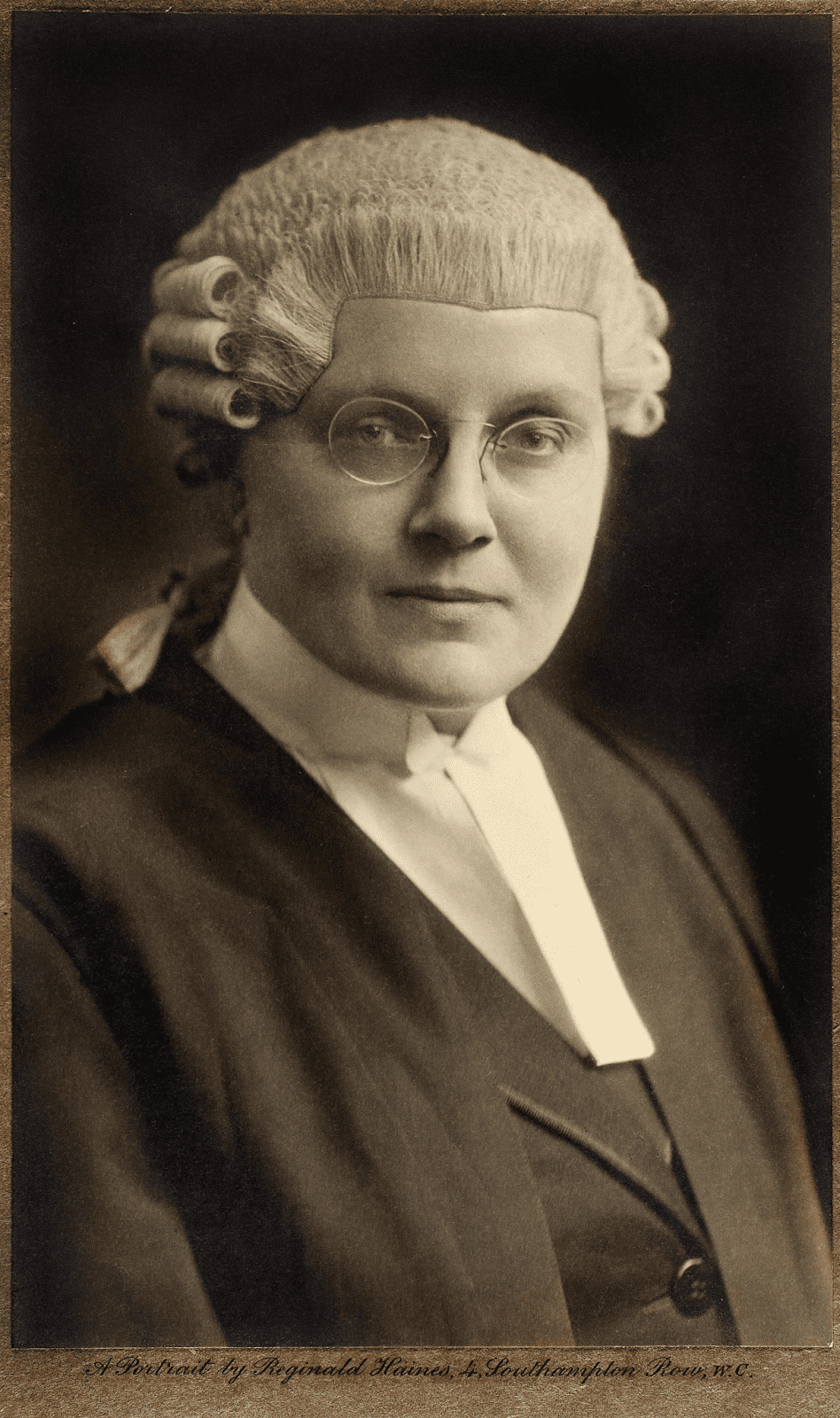
In general, the word “first” appears frequently in the story of her life, aptly describing her professional career. Helena Normanton became the first woman to obtain a divorce for her client and to lead the prosecution in a murder trial. Her career successes also included appearances at the High Court and the Old Bailey. This theme of being “first” carried over into her personal life. A striking example is that Helena was the first married woman in Great Britain to be issued a passport in her maiden name. Throughout her life, she wrote a number of works on feminism and law, including “Sex Differentiation in Salary,” “Everyday Law for Women,” and “The Trial of Mrs. Duncan.” Her body of work also includes the detective novel “Oliver Quendon’s First Case.” Without a doubt, Helena Normanton was a fascinating and incredible figure for her time, whose life was rich with diverse events.