

Modern art is impressive thanks to its unique images and relevance to social topics. It features original ideas, unusual shapes, amazing colours and a constant search for a better interpretation. The art by creative European artists is popular in different parts of the world. Artists from London also demonstrate an interesting and unique outlook. Their work is both modern and close to the classics, simple and obscure, bright and dull. Bridget Riley is one of the most original and popular painters. What is the story of her life and what are the main features of her art? Learn more at londonski.
Facts from biography and a call to creativity
Bridget Riley was born in London on April 24, 1931. In general, the girl’s family members were involved in art. Her father and grandfather were also artists. Thus, apparently, her path to creative self-realisation was paved from childhood. However, most of the plans were destroyed by the Second World War. During this historical period, Bridget’s father was mobilised, and the girl along with her mother and sister were forced to evacuate from London. That was also the reason she didn’t receive a proper primary education. However, after the war, Bridget Riley studied at Cheltenham Ladies’ College for several years. Later, she got the opportunity to study art at Goldsmiths’ College and the Royal College of Art. Bridget received a bachelor’s degree in 1955. The first step in her professional activity was teaching at the Convent of the Sacred Heart, where the artist also took up a basic design course. Later, Bridget Riley taught art in other educational institutions. We can also outline the peculiarities of her creativity in that period. Her first works were influenced by the pointillism technique. The op art features appeared in her works approximately in 1960. This style is characterised by various optical illusions. This direction dominated all of Bridget’s subsequent work.
Vibrant paintings and other features of her art

In general, Bridget Riley’s first significant success in art took place after she visited France in 1961. Then she and Peter Sedgley purchased an abandoned farm, which later became a nice studio. A year later, the artist held her first solo exhibition at Musgrave’s Gallery One in London. In 1965, the whole world saw her work at The Responsive Eye exhibition in New York. She got the opportunity to be one of the first to present a unique direction of her work. After all, such art was very rare back then. At first glance, that was an extremely good result. However, a lot of the artist’s works were used for commercial purposes due to the lack of copyright laws in the USA at that time. After that, Bridget Riley repeatedly participated in various creative events in London and other parts of the world.
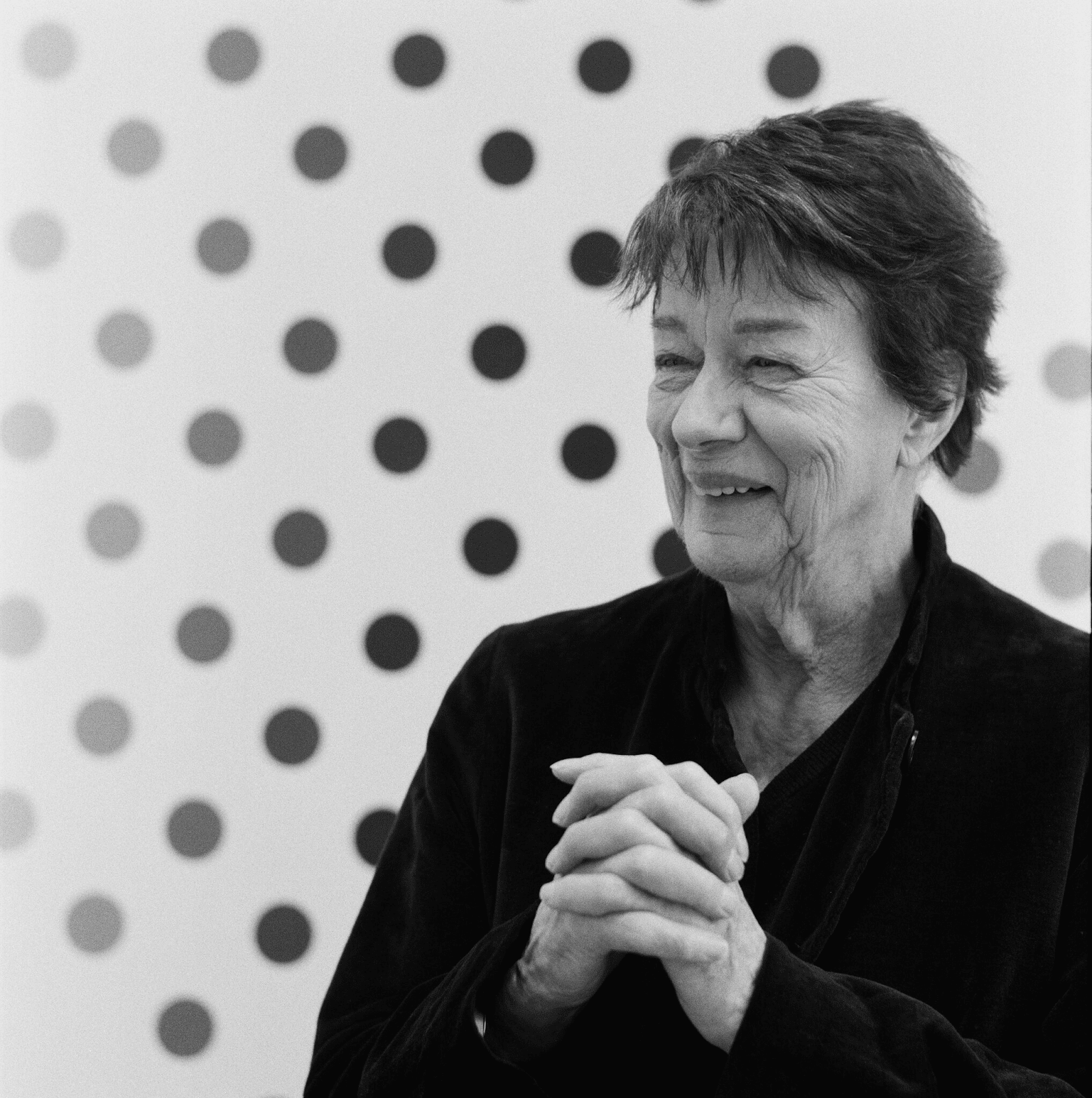
The artist’s first works were characterised by a variety of geometric shapes and contrast. Her most famous paintings were presented in black and white. They all came to life in front of the audience and everyone had the opportunity to see something special and personal in them. In general, the paintings presented the concept of the duality of mind and body and at the same time evoked quite different feelings in the audience. Throughout her professional career, Bridget Riley explored the position of shadows, experimented with colours and studied the methods of achieving contrast and shimmering effects.