

The judicial system in 17th-century England was quite different from modern models. As it has been a long time ago, modern researchers have certain ideas about the jurisprudence of that time, but they face an insufficient number of facts and documents. Usually, we can learn about the past thanks to historical data about the people who lived in that period. One of the most famous representatives of the judiciary was Edward Coke. We can find out many interesting facts through the prism of his worldview and professional activity. He was an outstanding politician, litigator, lawyer and author of legal research works. He was characterised as a ruthless and, at the same time, fair person. It is interesting to know how he managed to achieve such popularity. Learn more at londonski.
General principles of the judicial system in 17th-century London

A relatively clear structure of the legal system was formed in London in the 16th and 17th centuries. At least compared to previous years, it was united and structured. All courts were subordinated to the Chairman of the Board, the King. But the general principles that existed for many years didn’t correspond to the diversity and development of social relations. The system needed to update the model. Thus, a kind of competition arose between the common law and the law of equity.
The main facts from Edward Coke’s biography
Edward Coke was born on February 1, 1552, in a rather influential family. Its representatives were known as respectable members of society. In particular, his father was a lawyer. So, there are many reasons to assume that the fate of the boy was already decided from the moment he appeared in this world. Moreover, the other seven children in the family were girls. Since the family was not poor, the boy was lucky to get a good education. At the age of eight, he entered Norwich School, which is currently one of the oldest schools in Great Britain. The gymnasium offered the philological specialty. The boy mastered the technique of composing poems, the basic principles of eloquence and rhetoric and also learned the Greek language. Later, he entered Trinity College. He studied there for three years and acquired the necessary knowledge and skills for his future profession. In 1571, Edward Coke moved to London and connected his life with this city. In addition, he became a member of Clifford’s Inn, where he received his initial legal education and the opportunity to use the acquired knowledge in practice. Students were immersed in the world of debates and arguments. They discussed different cases every day and learned to formulate their statements clearly.

In 1582, having achieved success in jurisprudence, Edward Coke married Bridget Paston, when she reached her eighteenth. At that time, the lawyer had everything he needed for a happy life: a rapidly growing career, a luxurious estate, a wife and ten children. However, one of his sons died as an infant. His daughter Elizabeth and son Edward met death at quite a young age too. But such cases were considered normal at that time, given the constant epidemics and the low level of medicine. Later, his wife also passed away. Coke married again in 1598. His second wife was Elizabeth Hutton. That marriage gave rise to rumours that it was made for the sake of wealth and professional growth. A similar situation happened because of his daughter’s wedding. Coke married her off to find a patron in a court case. The girl didn’t want to marry at all and left her husband after several years of marriage.
The professional success of the famous lawyer
Considering the fact that the legal procedures of that time were very slow, Edward Coke’s professional career progressed quite quickly. He studied in London for 6 years, after which he was invited to the advocacy. Usually, the study lasted at least 8 years and students had to confirm the acquired knowledge. In 1578, Edward Coke was already practising as a lawyer, and later, received his first case in the Court of King’s Bench. After some time, he started giving lectures. It surprised everyone because Coke climbed the career ladder very quickly. It is difficult to name at least one of his followers who managed to achieve such success in such a short period of time. In the 1580s, he won several serious cases in court, proving the truth of his evidence to everyone.
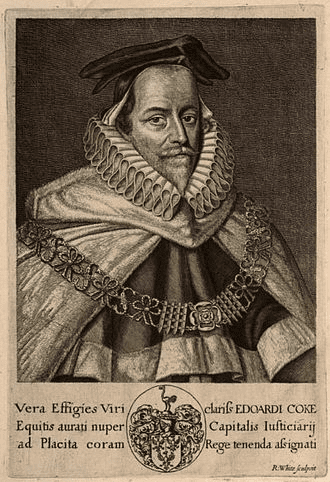
The incredible talent of the lawyer didn’t go unnoticed by the authorities. In the early 1590s, Edward Coke held the positions of Speaker of the House of Commons and Solicitor General. During this period, he also faced a number of challenges. A significant problem was the outbreak of the plague epidemic, which was spreading through the city at a frantic pace. Also, the threat of military conflicts with Spain became an obstacle to the normal functioning of the authorities. Edward Coke led constant debates on the adoption of bills, which decided the fate of the British. In April 1594, he was appointed Attorney General for England and Wales. In that position, he dealt with high treason and religious incidents.
In 1606, Edward Coke received the status of Lord Chief Justice. In that position, he experienced several serious conflicts. During one of the cases, he focused on the common law, as the highest law, thereby diminishing the role of the King. As a result, James I got very angry. In 1616, Coke was accused of three charges, one of which received no evidence or confirmation. In November of that year, he was dismissed. In 1620, Edward Coke was re-elected to Parliament and became a leading opposition MP. In 1629, the Parliament was dissolved and Coke didn’t apply for a new position. He returned to his estate and spent the last years of his life writing legal works. In particular, he revised the Petition of Right, in the creation of which he played a central role. Edward Coke wrote a number of popular research papers based on his own experiences. His books are still in demand and provide food for thought and research for modern legal professionals.
Edward Coke’s personal features, which influenced his professional activity
The death of his father had a great influence on young Edward Coke’s personality. The boy’s mother married a real estate trader. The children inherited all the qualities of their stepfather. He had a strong business penchant, a sense of justice and a lot of knowledge in the field of trade. It shaped the boy’s behaviour and skills, which made him a true jurist.
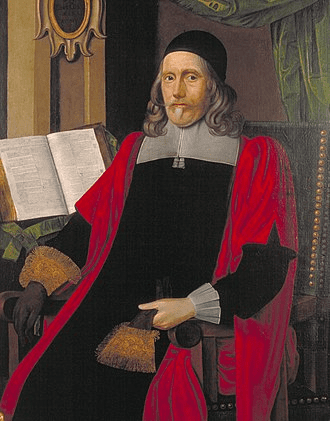
Edward Coke used quite rigorous methods, even for the 17th century, to achieve good results in professional activities. But it helped him in solving cases and proving the truth. Coke became the embodiment of common law in jurisprudence. His incorruptibility and respectability impressed many. Even after the establishment of some prohibitions by the royal authority, Edward Coke adhered to the principles of an honest and fair judge. His importance in the court case has been compared to the influence of Shakespeare in literature and Bacon in philosophy.